

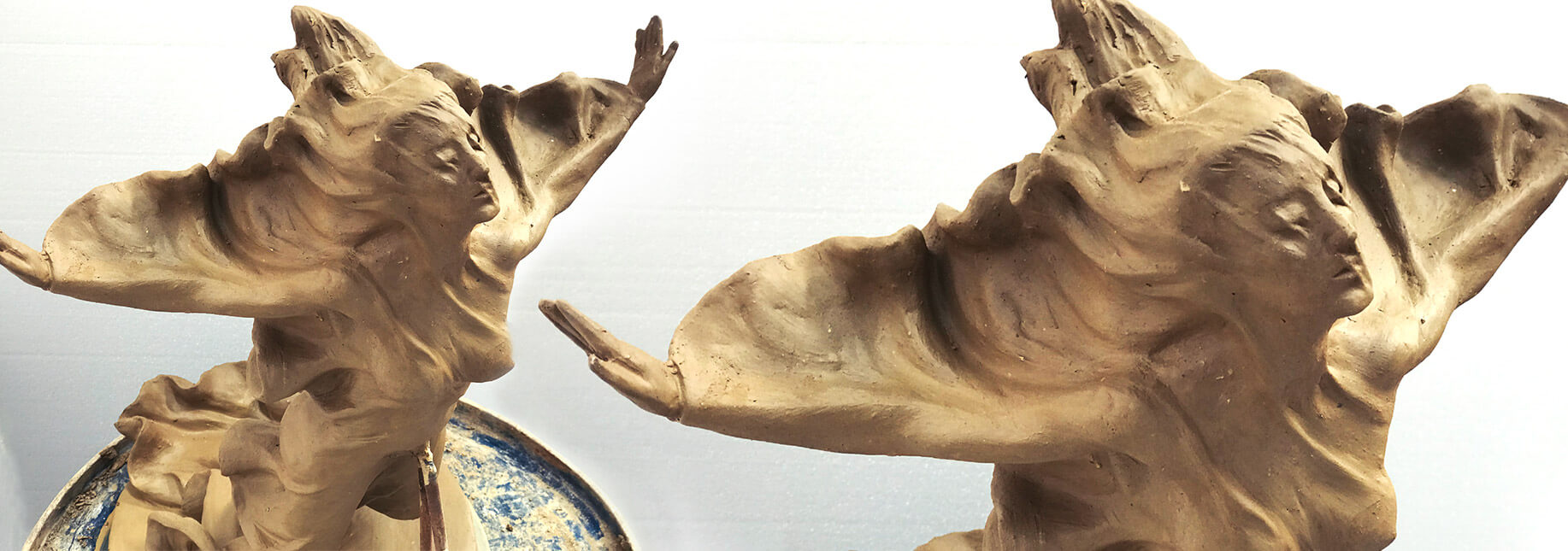
Even in an increasingly secular age, to capture an idea in sculpture is as close as we can get to immortality. How else do you explain the Sphinx, the pyramids of Giza, Mount Rushmore, tombstones?
When people think of sculpture they visualise three-dimensional possibilities. Colossal and intriguing works come to mind, many inspired by religion, mythology, or majesty. Every country has its statues — gods, saints, monarchs, military heroes, politicians.
Do we need sculpture?
But how does sculpture affect us individually? What good does it do? Do we need it at all?
It’s no coincidence that some sculpture is labelled as monumental art. It’s monumental on two levels. Many public (and some private) sculptures express ideas on a scale of magnitude and time no other form of art can.
It captures and preserves characteristics of life and thought in a monumental way. This represents our attempt at prolonging in lasting materials what we cannot preserve in the flesh. But regardless of its size, good sculpture helps define the core of our identities and carries it forward for generations beyond our own.
Mature art for human sensitivity
Sculpture has long been known as a mature art. Since our ancestors first chipped flakes of flint into primitive axe heads, we have been fascinated with making things. Those ancient tools could be used to carve images in wood and softer rock. Often the images were of the carvers themselves, or people, animals, and objects close to them.
It wasn’t long before the carvers began to apply their skills to the life of the imagination. Sculptures of inanimate beings and ideas soon followed. This was the very dawn of human sensitivity.
As we mature, our sense of values clarifies. Down-sizing and de-cluttering point the way. We discard non-essentials in favour of representations of higher personal, even spiritual, values; we lean towards artefacts that can express our deeper, unique identities.
Sculpture and the quest for meaning
As emotional creatures, we find ourselves questing for and questioning meaning in our lives and relationships. Sculpture, of all art forms, best quantifies this yearning by giving us an extra dimension of communication and interpretation.
It doesn’t end there. In so many cases, sculpture’s earthy, robust, enduring presence adds a tactile property that invites touch, exploration, and a personal engagement. It proclaims: ‘Although we die, ideas live.’
When you grasp these concepts and feel the magnetic pull of sculpture as living, material art able to project your own personality and values, you embark on a visual and tactile pilgrimage that will outlast you and your successors.
History goes forward
Sculpture admirers know history goes forward, not backwards. They understand that commissioning or acquiring a sculpture is a bequest to the future as much as a present for their own present.
When the time comes for you to embrace sculpture, you will know that you have surrendered to, and shared in, an act of love.
To satisfy your curiosity about sculpture in your life, call Todd Stuart on +61 4 5151 8865, or visit mainartery.art.


