

Does a honey bee stand back, dust off its legs and wings, and boast to admiring passers-by: ‘How’s that for a perfect hexagonal sculpture?’
On the other hand, would another honey bee — maybe not your average working type — contemplate the idea of building a pentagon or a heptagon?
The short answer to both questions is ‘no’. When you need to consume eight grams of precious honey to produce one gram of wax, you’d better be sure of your architecture.
It’s also another way of saying that all species are skilled at survival in their own environments. But only humans, at least in Maslovian terms, have developed skills and forms of expression that go beyond survival and reproduction. In other words, we are the only species to have developed symbolism as a movement in and of itself.
Sculptures as concepts of their times
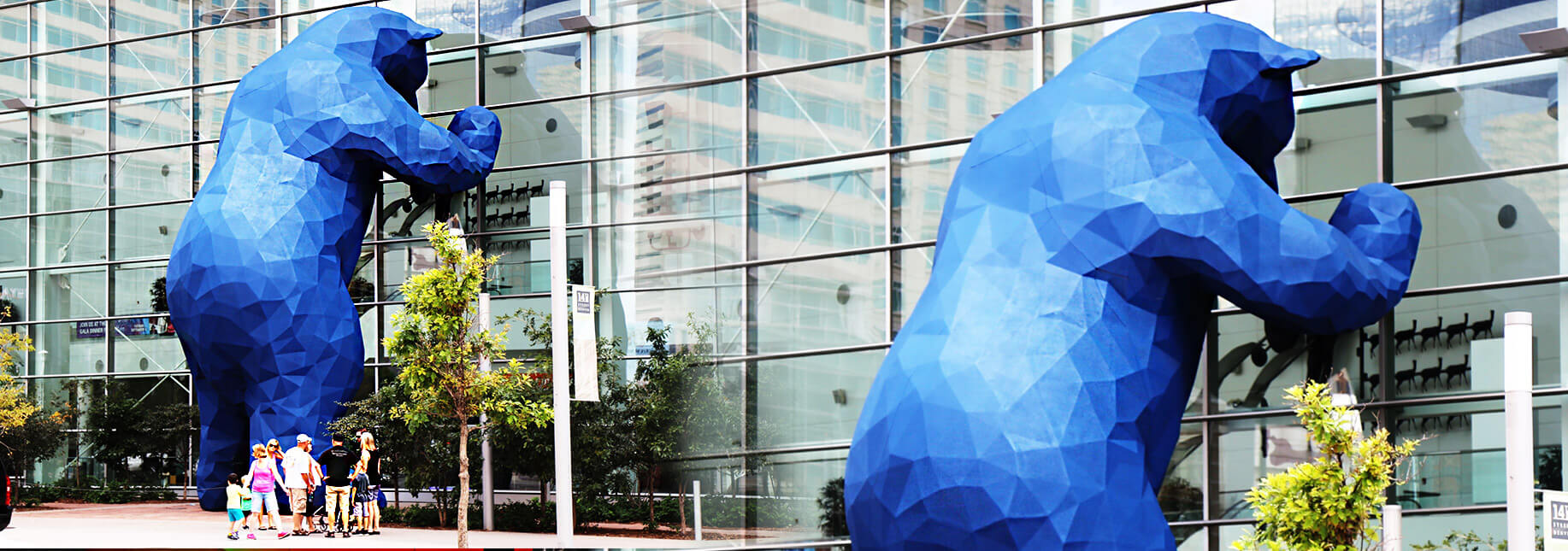
Imagine a world without the Pyramids, the Sphinx, the Eiffel Tower, Stonehenge, and hundreds of other universally-known sculptures. All stand for a concept of their times — the mysteries of the origins of the universe, the fear and adoration of religious figures, monuments to progress, and tributes to technological advancement.
On a lesser scale, hardly a town or village throughout the world lacks some form of public art. These could be statues venerating community leaders, war heroes, and other celebrities; temples, churches, and shrines devoted to gods and the dead; and monumental art dedicated to thousands of major and minor causes.
Does public art express civil culture? Is it the physical manifestation of a community’s achievements, and its belief in itself? Or is it something altogether more esoteric and debatable: a business person’s three dimensional ego, a sports club’s hero worship, an episode in a town’s history?
Is sculpture culture itself?
On the other hand, is public art not just an expression of culture, but culture itself? So when New Yorkers show off the Statue of Liberty they identify with one of the great monuments of the modern world. More, they lay historical claim to the mighty sentiments it commemorates: independence and the abolition of slavery.
Closer to home, when Sydney people show visitors their glorious bridge, they point out not a convenient transport connection, but a proud part of themselves and their place in the world.
In another Australian case, it could even be a quirky pride in and tourist promotion of local or regional phenomena: very large lobsters, pineapples, and other examples of economic or agricultural activity with which residents are sometimes startlingly satisfied.
Art in public versus public art
Artists and those interested in promoting the debate sometimes draw a distinction between art in public and public art. The former, they claim, can be random — any piece of art placed anywhere. The latter has a much tighter definition: art designed to fit a place, and a place dedicated to making the art placed within it more meaningful.
Jack Becker, in his essay in Monograph, the journal of Americans for the Arts, captures the significance of public art neatly. He first reminds us of other social and cultural institutions that help define civilization.
He points out living sculptures — the parks and gardens that protect us from the more rampant encroachments of modern living. He adds that public art projects allow us as citizens a voice in the aesthetics, not just the practicalities of daily life, through four measures.
‘It can:
• Engage civic dialogue and community
• Attract attention and economic benefit
• Connect artists with communities; and
• Enhance public appreciation of art.’
Love it or hate it, public art, especially sculpture, provokes thinking beyond the museum, the gallery, and the private household. We can truthfully say public art is civilisation worn on our sleeves.
For a sculptor’s view on art merging your public and private lives, call Todd Stuart on +61 4 5151 8865, or visit mainartery.art, or download further insights with our booklet 13 biggest mistakes and top tips for commissioning large scale sculpture.


