

Many inexperienced art buyers wonder why sculpture is so expensive. You can easily buy an oil painting from an unknown artist for a few hundred dollars or less. Why does genuine sculpture cost thousands more?
Comparing painting and sculpture is imbalanced. An average sized painting may take just hours to create and cost as little as $30 in paint and canvas. Sculpture stretches these limits a lot further, and involves additional commercial considerations.
Three dimensions more than doubles the challenge
Creating even small sculptures generally takes months at a minimum, and mostly uses costly, high-grade materials. Because it involves three dimensions, not painting’s two, conceiving the right idea is more than double the challenge.
The artist must then convert the concept into a perfectly carved wooden or stone sculpture. If working in metal, they must shape a perfect clay model and produce flawless fiberglass moulds in which to cast or forge materials.
The sculptor may or may not have their own foundry. If they do, they will have invested vast sums of money and effort setting up complex technology that is time consuming and costly to operate, and uses expensive materials. These overheads need to be recovered, plus the time involved, just as in any other enterprise.
If they don’t own their foundry, they have to risk considerably money up front to fund the manufacturing operation, employ artisans, and pay for materials.
No guarantee of a sale
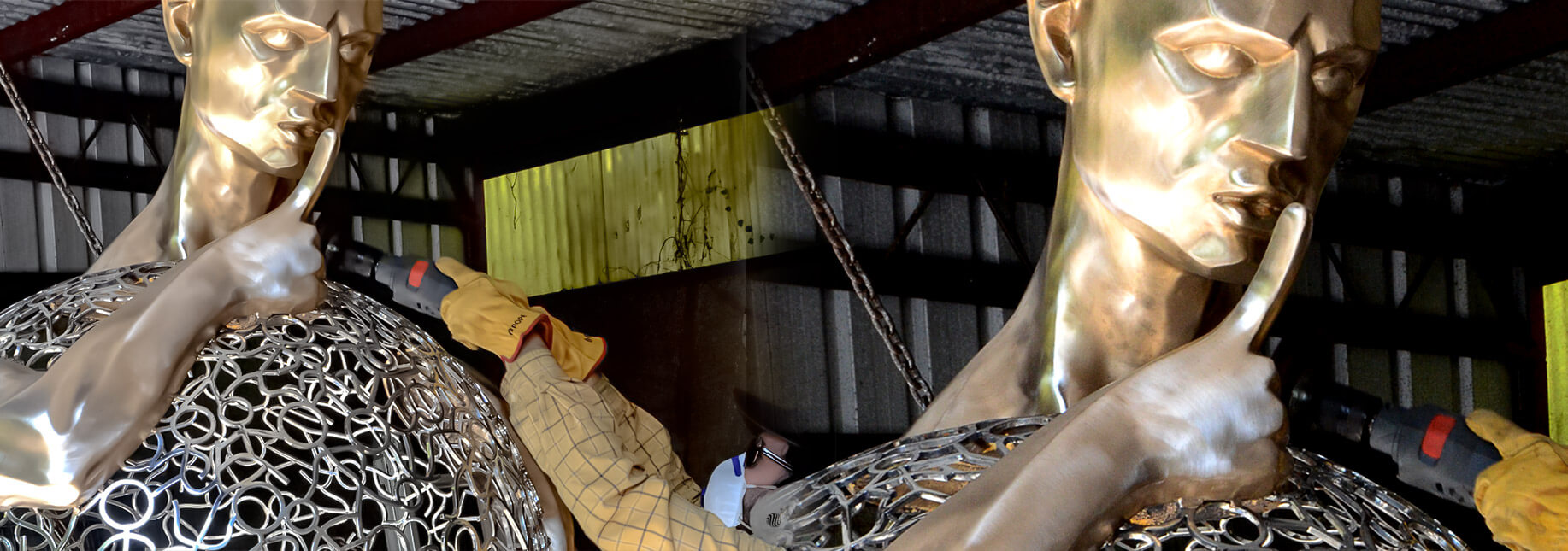
The rough casting then needs to be smoothed, assembled, and have finishes applied which can involve dangerous and toxic processes. With all these risks, there is the added weight of a hefty investment of time, with no guarantee of a sale at the end.
By comparison, painters face virtually no risk, especially when they produce uncommissioned works for themselves.
Imagine a sculptor creates 12 new works to exhibit with a gallery and to potentially sell. Let’s say they have a mixture of mostly smaller pieces and one or two medium to large pieces. In that combination, they could easily have $60,000 of their own money tied up in the work, plus any specialised transport costs, before any possibility of a sale. It’s one of the reasons why you see so few sculptors showing a full exhibition of works.
Suppose the sculptor was lucky enough to sell half of their smaller pieces at a relatively high average of $15,000 each, delivering a gross return of $75,000. The uninformed observer might think the artist must be raking in the cash.
Look a little closer
But look a little closer. The gallery takes a commission of 40 to 50 per cent, and the artist must also pay GST, leaving them with a net return of around $30,000, and a deficit of $30,000.
The unseasoned buyer might also argue that a popular piece in a limited edition can sell several times over until the edition is sold out, again at a considerable profit to the artist. More likely, the artist arrived at that very marketable work only after creating a series of other sculptures to reach an artistic resolution, incurring risk and losses along the way.
If it’s a unique, one-off sculpture, these costs need to be included in the sale price. If it is a limited edition work, the costs need to be amortised over the predicted number of editions to be sold, a sales cycle no one can predict.
So spare a thought for the sculptor when you next see a work bearing an apparently hefty price ticket. Beneath the surface of the work lies a saga of risk, uncertainty, cost, and sometimes suffering, all in the name of beauty.
Talk to Todd (+61 4 5151 8865) about the price — but also the value — of great sculpture, or visit the link Sculpture as investment: gold, or just heavy metal?


