

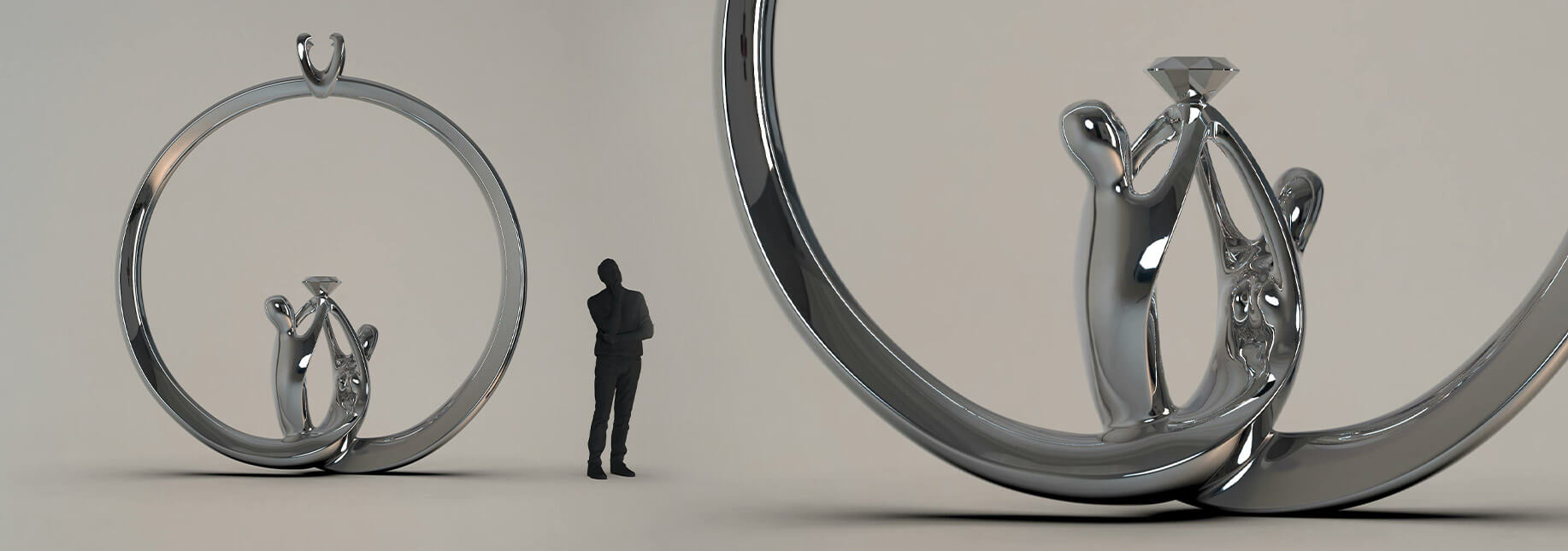
Sculpture is one of art’s grandest challenges, and like a marriage, is best faced with a full understanding of what lies ahead.
Here are 10 questions you should ask and answer as you set out.
1. Is sculpture for you? Sculptures, especially larger installations, make powerful statements about their owners. Without careful thought about the medium and what it stands for, as well as your own tastes, you could end up with an embarrassing folly.
2. Buy or rent? You don’t always have to buy sculpture, although purchase is the most common form of acquisition. A few reputable agents and curators keep galleries of world class work that you can lease on negotiated terms. It’s worth doing your homework first.
3. Art or decoration? The most prized sculptures are usually original and in limited editions using talented design, skilled artisanship, and quality materials. Decoration offers far less.
4. Is your sculpture for business? Corporate sculpture can express and promote your brand values. These are uniquely yours, but remember, those values, and the sculpture that represents them, may not appeal to others should you decide to dispose of the work later.
5. Pleasure or investment? Great art appreciates because it’s rare. If you’re looking to sculpture for personal pleasure, you’ll buy what you love. If you’re looking for an investment, be sure to research your sculpture’s lineage. Is the sculptor prominent? Does their work sell well? Is the work exclusive, or in a limited edition? Does it have a certificate of authenticity?
6. Where will your sculpture live? Consider its location, proximity to other structures, and exposure to people, traffic, weather, and other factors. These will also influence theme, size, shape, and finish.
7. What should you pay? Good sculpture comes at a price, but one that can reward you many times over. Seek advice from reputable sculptors or agents who can interpret your ideas into a realistic budget.
8. How do you identify the right sculptor? The best sculptors combine flair and creativity with an ability to accommodate your wishes. Avoid these extremes: artists who bow to clients’ every demand, and sculptors who insist they alone dictate the outcome. Request expert advice. It will deliver satisfaction and savings in the long run.
9. How important is communication? Good sculptors create good art because they listen, and keep clients informed throughout the process. They identify any glitches, and solve them, making the journey an adventure instead of a nightmare.
10. What about documentation? Ask for a written proposal. It should cover components such as your and the sculptor’s rights, agreements on concepts, costs, time, types and grades of materials, finishes, installation, and maintenance. The proposal should also give you a clear idea of the lifespan of the art.
Before you consummate your sculpture marriage, call Todd Stuart on +61 4 5151 8865, or visit mainartery.art.


