

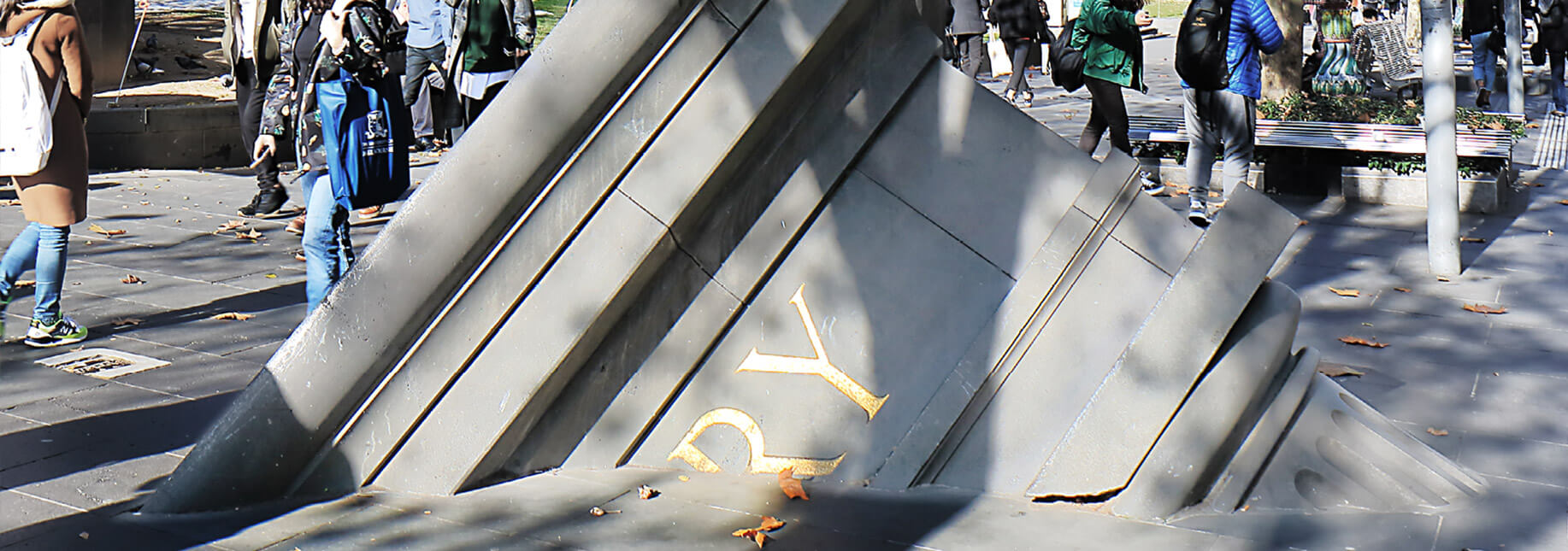
Triple dimensionality distinguishes sculpture from every other art form. When you can view, (and often touch) a sculpture from almost any angle or direction, you understand just how dynamic an art form it is.
Having a clear understanding of the space your sculpture will occupy can have a significant impact on your whole project. This applies especially if the artwork is subject to these conditions:
• It will live outdoors
• It will be positioned in a public space
• It will be free-standing.
If you plan to commission a sculptor to create your artwork, your brief will be as thorough as possible. You’ll outline as best you can what you want the sculpture to express, the type of materials it might involve, and have some idea of the shape and dimensions of the final work.
Share your thoughts on location
Sharing your thoughts on location with the artist will always prove beneficial. If the artist is local, or the project is of high value, exposing the sculptor to the proposed site can influence their thinking in design, shape, size, and choice of materials.
Some sculptors will use the opportunity to capture photographs of the location. They then superimpose elements of their design ideas or actual sculptures onto the images. This way, you’re included in the artistic journey from the outset. You’ll feel more emotionally connected to the process, the project, and the finished work.
Your project may be outdoors, for example a sculpture in a garden setting. A site visit or detailed photographs of the location will give the artist valuable reference for orientation of the installed work. They will value the opportunity to visualise the work in relation to other elements of the setting such as angles of light, foliage, and built structures.
Equally, if a work is to live indoors, visual details of the surrounding spaces, architecture, colour schemes, light sources, and other art will add valuable data to inform the sculptor.
Sculpture in public spaces
Physically exposing the artist to the proposed location, or supplying them with comprehensive visual material will also help if the sculpture is to live in a public space. Architects and interior designers have a strong sense of how human traffic interacts with public spaces such as lobbies, courtyards, and thoroughfares.
They understand how sculpture guides and influences people, and intensifies their sense of belonging in space and time.
If the sculpture is to stand free — in other words people can circulate around and interact with it — then decisions will need to be made regarding the durability of the materials, and protection of the work against vandalism, environmental damage (weathering, bird droppings, pollution) and everyday wear and tear.
Before you commission or purchase your sculpture, get some advice on where and how to locate it from sculptor and project manager, call Todd Stuart on +61 4 5151 8865, or visit mainartery.art.


